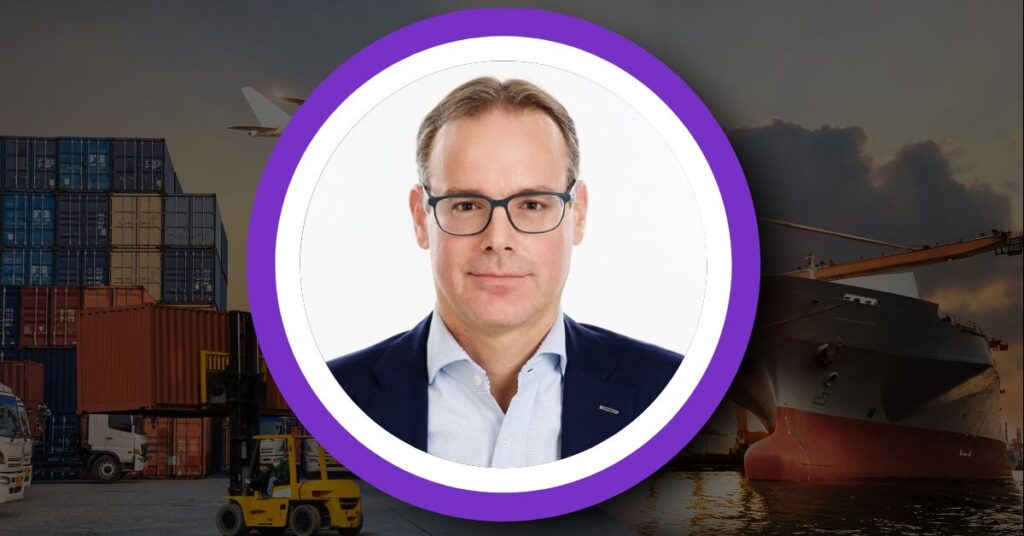
General Counsel of Alpega Group Philip Pauser discusses with CEE In-House Matters his legal career, the role in-house counsels play in driving a business forward, the regulatory trends in the logistics industry that are likely to create opportunities and challenges, and more.
CEEIHM: You’ve moved from private practice to IBM, and then into senior in-house leadership roles. Could you walk us through what motivated each move, and what unexpected lessons or challenges you encountered along the way?
Pauser: During my time in private practice, I was always curious what happened after the contract has been signed and what some clauses actually mean in practice for the client. As outside counsel, one has often only limited insight and understanding of the practical consequences of a contract, besides the obvious legal ones. This was the main reason to move in-house. That I ended up at IBM was a bit of coincidence, but it was quickly clear that the IT industry is what am truly interested in. After IBM, I was given the opportunity to build a legal department from scratch in a smaller but expanding company. This greenfield project aroused my curiosity and was a great experience.
The unexpected lessons, although expected somewhat in theory, is the amount and importance of the non-legal work as in-house counsel. As in-house counsel, you are more project manger than a lawyer. Also, you work and collaborate all the time with colleagues who have no legal background. This requires a different form of communication obviously than communicating to legal peers.
CEEIHM: How do you maintain a strategic, big-picture view while still staying grounded in the daily legal issues?
Pauser: Over time, one learns to participate at the important meetings, to know, ask, and keep contact to the right people in order to get access to information, which really matters. I believe there is no formal recipe for that. It is a combination of experience, routine, and common sense one gains over time.
CEEIHM: Senior in-house legal professionals are expected to provide “commercially minded legal advice.” What does this actually mean in practice?
Pauser: This means that one needs to understand (also from technological point of view) the products and the services provided by your company and which value-add such products/services create for the customer. Overall, one needs to understand to certain degree of detail the industry your company and the customer are operating. Only with such understanding one can assess what financial consequences certain clauses in a contract, SoW or SLA may have for your own company and for the customer.
CEEIHM: Are there tools, processes, or frameworks that help your legal team collaborate efficiently with product, operations, and sales teams across the company?
Pauser: Yes there are, without going to much in details, there are plenty of different collaboration/sharing IT applications and AI tools, which make the collaboration between departments efficient.
CEEIHM: Which emerging technologies do you believe will have the biggest legal impact on logistics SaaS providers in the next few years?
Pauser: This I believe is easy to answer. It is of course AI, which on the one hand will help creating/obtaining data and on the other hand can analyze big amounts of such data to create value-added services for the customer.
CEEIHM: As logistics becomes more software- and platform-driven, what regulatory challenges do you see as most pressing, and where do you see regulation creating opportunities rather than obstacles?
Pauser: The legislator has been quite busy with new regulations and will continue to do so in the future. It is really a whole bundle of laws, which interact with each other and are depending on each other. So, it is hard to single out one regulatory challenge. The Data Act with the switching rights of customers is certainly a big challenge for SaaS providers, but of course the NIS-2 directive in combination with Cyber Resilience Act and AI Act combined with the GDPR pose challenges all together.
Personally, I believe these regulatory measures, as important and necessary as they are, they do not create opportunities as such for IT-services provider in the field of logistics. However, in the end, customers (shippers, carriers) benefit from the improved cyber security measures and it is the task of IT-services provider to provide the best possible logistics solution in line with regulatory framework.
CEEIHM: How do you future-proof long-term contracts in an industry where technology often evolves faster than regulation?
Pauser: On the one hand, by having contractual rights to change the delivery of services unilaterally (of course without diminishing the quality of the services for the customer) and by agreeing on a contractual change request procedure, which already takes into consideration the financial impact of future technological and regulatory changes.
CEEIHM: If you were starting your legal career today, what would you prioritize learning in your first five years?
Pauser: Starting with the basics, i.e., first how to draft a contract in a fast, efficient way, which serves the interest of your company/stakeholder best, followed by learning how to negotiate. Afterwards, learning how to structure a deal/project. Project management is the key (non-legal) skill for an in-house counsel.