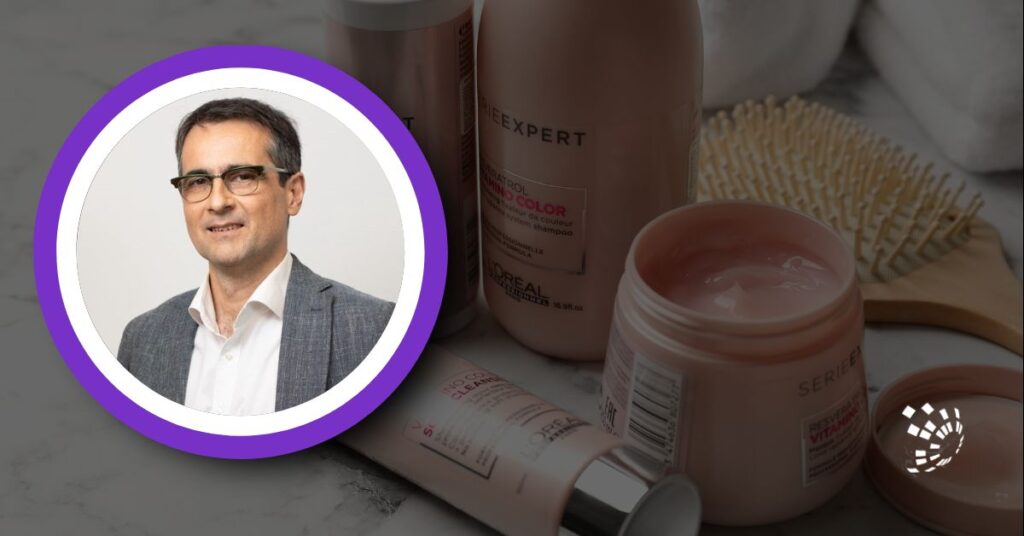
General Counsel of L’Oreal Adria & Balkan, Milan Lomic, shares how his role has changed in the 13 years with the company, discusses the impact of changing consumer expectations on the legal strategy, breaks down most pressing regulatory challenges in the beauty and cosmetics industry in the region, explains his approach to ensuring smooth collaboration with other C-level executives, and more.
CEEIHM: You’ve been with L’Oreal for over a decade. What have been the biggest shifts in your role over that time?
Lomic: Yes indeed, I have been with L’Oreal for exactly 13 years now. Looking back, the shifts in my role have been quite profound, mirroring both the incredible growth of L’Oreal in the Adria-Balkan cluster and the increasing complexity of the legal and regulatory environment.
Initially, when I joined in 2012, my focus was very much on establishing or cascading down from the HQ a robust legal framework for a rapidly expanding market. It was often a case of being the primary legal point of contact, handling a wide range of challenges hands-on, and reacting to immediate business needs. The development of the cluster legal function at that time, while crucial, began with a more operational and reactive focus. Today, it is seamlessly integrated into strategic decision-making.
As our business has experienced significant growth – the scope and nature of legal matters have evolved dramatically. This has necessitated several key shifts in my role:
One of the most significant changes has been the transition from purely providing legal advice to becoming a true strategic and trusted business partner, with a mission to enable and secure our business for a growth. As a member of the Management Committee, I’m now deeply involved in shaping the overall business strategy for the cluster. It’s about proactive risk & opportunities management while leveraging legal expertise to drive sustainable growth. When I started, it was likely a more solitary legal role or with minimal support. The growth of legal matters, particularly with the new regulations like GDPR, highlighted the need for specialized expertise. Building and leading a small but mighty team of two colleagues, including a Data Protection Officer, has been a massive shift. My role now heavily involves mentoring, empowering, and delegating, ensuring that each team member can excel in their area while I oversee the broader legal strategy and complex, high-stakes matters. It’s about multiplying our impact through specialized knowledge.
Then, of course, the regulatory environment across the Adria-Balkan region, and especially on EU level, has become exponentially more intricate. From consumer protection laws, competition regulations, digital marketing and e-commerce legislation, to data privacy and sustainability requirements, the sheer volume and complexity of legal frameworks have exploded. My role has shifted to not only understanding these changes but also to interpreting their impact on our business, implementing internal policies, and ensuring full compliance, across multiple jurisdictions within the cluster.
Finally, I have to mention the digital transformation which has had profoundly impacted how L’Oreal operates, from online sales and digital marketing to the use of new technologies in product development and sales. This has presented new legal challenges – IP rights in the digital space, influencer marketing regulations, and the legalities of AI, to name a few. My role has evolved to ensure we are legally agile and innovative in supporting these digital ventures, protecting the company’s assets, and navigating emerging legal frontiers.
CEEIHM: How do consumer expectations around sustainability and product transparency influence your legal strategy?
Lomic: Consumer expectations around sustainability and product transparency are definitely one of the major topics; they are powerful drivers shaping business strategy, and consequently, profoundly influencing our legal approach at L’Oreal, especially within the dynamic Adria-Balkan cluster. Historically, legal strategy often focused on compliance with existing regulations. However, the surge in consumer demand for sustainability and transparency means we must be far more proactive.
Consumers are increasingly discerning and skeptical. Unsubstantiated claims, even if not explicitly illegal, can lead to severe reputational damage, consumer backlash, and legal challenges. Our legal strategy now involves rigorous pre-clearance of all marketing claims. Similarly, avoiding “Greenwashing” is perhaps the biggest legal risk in this area. Regulators across Europe (and by extension, the Adria-Balkan region) are intensifying efforts to combat greenwashing. Our legal team is very involved in marketing campaigns to ensure that any environmental or social claims are not only accurate but also substantiated. We scrutinize wording, imagery, and overall messaging to ensure it genuinely reflects our efforts and doesn’t mislead.
I would say that sustainability is no longer just a marketing add-on; it’s a core business imperative that touches every part of the company – there’s a growing legal requirement and expectation for transparent reporting on Environmental, Social, and Governance (ESG). Sustainability commitments are increasingly integrated into different contracts, not just with suppliers but also with distributors and retailers, ensuring alignment across the value chain on environmental and social objectives. This includes clauses related to packaging waste, carbon reduction targets, and ethical practices.
Consumer expectations around sustainability and transparency have transformed our legal function from primarily a reactive compliance role to a proactive, strategic partner that guides the business towards responsible innovation, robust claim substantiation, and transparent communication. We meticulously manage legal and reputational risks in an evolving regulatory landscape, in close cooperation with our Scientific & Regulatory and Corporate Affairs & Engagement departments, to build trust and ensure the long-term success of L’Oreal in the region.
CEEIHM: What regulatory challenges are most pressing right now for the beauty and cosmetics industry in this region?
Lomic: Challenges are numerous – the beauty and cosmetics industry is currently navigating a period of significant regulatory evolution, largely driven by a strong focus on consumer safety, environmental protection, and sustainability. Of course, then there are other, more general challenges, that pretty much all the market participants are facing.
Based on the latest developments, most pressing ones, from beauty industry perspective are related to stricter ingredient restrictions and bans. I will here mention just one, commonly present, related to nanomaterials – new regulations are introducing stricter controls and even outright bans on specific nanomaterials.
Also, sustainability and environmental regulations are impacting the entire product lifecycle, from ingredients to packaging and waste.
Modernizing consumer protection and ensuring clear communication remain high on the regulatory agenda. In that sense, I would mention the General Product Safety Regulation (GPSR) which modernizes the EU’s product safety framework. This is broad-reaching and impacts how product safety is assessed, communicated, and managed, especially in the context of e-commerce and digital marketplaces.
Of course, the regulatory landscape is not static; ongoing revisions mean continuous monitoring is essential and this primarily includes revision of the EU Cosmetics Regulation on which the EC is actively working on. These revisions could introduce further changes to ingredient lists, safety assessment requirements, and even administrative processes, that will certainly present new challenges for beauty and cosmetics industry.
I would here also like to mention very important challenges in the digital world, competition protection and consumer safety, particularly concerning online sales and platforms. The EU came up with a series of groundbreaking regulations that are impacting the Adria-Balkan region, even for non-EU members, due to the drive for regulatory harmonization and economic ties. The most pressing challenges there revolve around the revised Vertical Block Exemption Regulation (VBER) representing a direct response to the increasing importance of online sales. Also, The Digital Markets Act (DMA) – a game-changer designed to ensure fair and contestable markets in the digital sector by targeting “gatekeepers” – very large online platforms (like certain search engines, social media, or app stores). For us, the challenge and opportunity is to understand how these new rules can level the playing field, ensure fair access to consumers on major platforms, and potentially reduce reliance on certain gatekeeper services that may have previously created bottlenecks.
Finally, I need to mention consumer protection in the digital world, and especially influencer marketing and e-commerce. In essence, these new regulations represent a concerted effort to bring the digital world into line with core principles of fair competition and strong consumer protection. For L’Oreal, as a leading global beauty company, it means continuously adapting our digital strategies, ensuring meticulous compliance across all online channels and our license to operate, and leveraging these new frameworks to advocate for a more equitable and safe digital marketplace for both our business and our consumers.”
CEEIHM: As General Counsel, how do you collaborate with other C-level executives to align legal priorities with business growth?
Lomic: It’s no longer enough for legal to be a back-office function; we are an integral part of shaping and driving the business strategy.
For me, as General Counsel and a member of the Management Committee for L’Oreal’s Adria-Balkan cluster, aligning legal priorities with business growth is a continuous and multi-faceted process. In that sense, the most fundamental way to align legal priorities with business growth is to ensure legal is at the table from the very beginning, not just brought in to review decisions after they’ve been made. Being member of the Management Committee is of great importance, as I participate in all strategic discussions, business reviews and budget planning. This allows me to understand the business’s overarching goals, market strategies, digital transformation initiatives, and financial targets.
By being deeply involved, I can proactively identify potential legal risks or opportunities associated with proposed business strategies or specific projects. The role of legal is to translate complex legal issues into clear business implications that my C-level colleagues can understand and act upon. Most of the time I work closely with the Country Manager and CFO to ensure that legal risks are quantified where possible, or at least clearly articulated in terms of their potential financial, reputational, or operational impact. This allows us to make informed, risk-adjusted business decisions that balance ambition with prudence.With the Chief Digital Marketing Officer and GMs of the divisions, I collaborate to develop compliant marketing strategies, advertising campaigns, and product claims that are both innovative and legally sound. This includes navigating complex areas like influencer marketing, digital promotions, and “green” claims, ensuring that our creativity is always within legal boundaries but not stifled by them.
My team members are encouraged to build strong relationships throughout the organization. This allows them to become embedded legal advisors, understanding the day-to-day challenges and providing tailored, practical legal solutions that accelerate business objectives rather than impede them.
CEEIHM: What do you see as the biggest opportunities for brands in the industry over the next five years?
Lomic: Looking ahead over the next five years, I see several significant opportunities for beauty brands, particularly for a leader like L’Oreal in the Adria-Balkan region. These opportunities are largely driven by evolving consumer behaviors, technological advancements, a heightened global consciousness, and crucial demographic shifts.
Consumers are increasingly demanding products and experiences tailored precisely to their unique needs, skin concerns, preferences, and even their local environmental factors. Leveraging AI and advanced data analytics, brands can move beyond basic personalization to hyper-personalization at scale. This means analyzing vast datasets from consumer interactions, online diagnostics, skin analysis tools. From a legal perspective this presents opportunities for innovative product development and direct-to-consumer models. However, this also requires developing robust data privacy frameworks (ensuring GDPR and local equivalents are met, especially with sensitive personal data like biometrics), clear AI ethics policies, and strong IP protection. The legal team’s role is to enable this innovation responsibly, ensuring trust and compliance are built into every personalized solution.
Consumers also seem to increasingly crave for brands that demonstrate genuine commitment to sustainability, ethical practices, and transparency.This goes beyond simply ‘natural’ ingredients. It encompasses the entire value chain. The opportunity for us is to lead in establishing and exceeding these new standards. Legally, this means strengthening contractual agreements with suppliers for full traceability and sustainable practices and ensuring truthful and verifiable marketing claims to avoid greenwashing (as discussed earlier). It also involves navigating complex waste and packaging regulations and exploring legal frameworks for new business models, like refill stations.
Men and the aging population are the two segments that represent significant opportunities for expansion and specialized product development. It seems that there’s a growing acceptance and desire among men for sophisticated skincare routines, subtle cosmetic solutions, and specialized haircare, moving beyond purely functional products to those focused on well-being and appearance enhancement. On the legal side this means focus on ensuring inclusive and non-discriminatory marketing claims, preventing gender stereotyping in advertising (which can be a regulatory concern).
When it comes to the aging population globally, even more in Adria-Balkan region, this demographic often possesses significant purchasing power and a strong desire to maintain their vitality and appearance. However, this segment requires extreme care in marketing claims to avoid any implication of reversing the aging process, which could be deemed misleading. Furthermore, ensuring accessibility in packaging, instructions, and digital communication (tying back to the European Accessibility Act) is crucial to serve this demographic effectively and compliantly.
CEEIHM: Where do you see the biggest gaps between L’Oreal’s global corporate strategy/priorities and the regulatory realities in the Adria–Balkan region, and how do you bridge them?
For L’Oreal in the Adria-Balkan cluster, bridging the gaps between global corporate strategy and regional regulatory realities is a continuous, dynamic process. These gaps typically don’t represent a divergence in goals, but rather in the pathways to achieving those goals due to local legal and market specificities.
L’Oreal’s global strategy, particularly on areas like product safety, ingredient restrictions, and digital regulations (e.g., DSA, DMA, VBER), adheres to the highest EU standards. The expectation is a relatively uniform application across markets that are part of or closely align with the EU. At the same time, even if the whole Adria-Balkan region largely strives to harmonize with EU law, when it comes to our non-EU markets, the pace of transposition, the exact wording of national laws, and the level and interpretation of enforcement can vary significantly between countries (e.g., an EU member vs. an accession country). A new EU regulation might be immediately effective in Croatia, but take a year or more to be fully implemented and enforced in Serbia or Albania, potentially with local adaptations.
Whenever possible, we are applying the EU set of standards even for non-EU markets. When this is not possible – we maintain a rigorous system for monitoring legal and regulatory developments in each country within the cluster, often even before laws are formally adopted. This includes subscribing to legal alerts, engaging with local counsel, and participating in industry associations. Whenever possible, global directives are translated into country-specific action plans. This might mean adjusting timelines, creating country-specific guidance documents, or seeking specific local legal opinions on how a global policy needs to be adapted to comply with national nuances while still meeting the global objective. In such cases, we also conduct regular risk assessments to prioritize compliance efforts based on the potential impact and likelihood of non-compliance in each specific market, ensuring resources are allocated
CEEIHM: What skills do you consider most important for an in-house lawyer to succeed in a multinational environment like L’Oreal?
Lomic: Given the dynamic nature of L’Oreal and the multinational environment we operate in, for an in-house lawyer to truly thrive and add strategic value in such a setting, it goes far beyond just legal knowledge.
Above all, the business acumen is paramount. A successful in-house lawyer in a multinational company must deeply understand the business’s objectives, strategies, financial drivers, and operational realities. It means speaking the language of business, anticipating commercial needs, and understanding how legal advice impacts the bottom line and market position. You need to know the products, how they are marketed, how they are sold, basically how the company makes money. This allows you to provide practical, solution-oriented advice rather than just identifying risks.
Instead of being perceived as a roadblock, a great in-house lawyer is a strategic partner. It’s about enabling sustainable growth by finding compliant pathways, not just saying “no.” In a multinational context, this often means navigating complex, sometimes conflicting, regulatory frameworks across different jurisdictions.
The ability to articulate complex legal concepts clearly, concisely, and persuasively – often to non-legal audiences – is crucial. This also includes active listening to truly understand their challenges and objectives, and then tailoring your advice to be relevant and actionable in their specific context.
As General Counsel, you rarely have direct authority over the operational teams you advise. Therefore, success hinges on your ability to build trust, foster strong relationships, and influence outcomes through expertise, sound judgment, and a collaborative spirit. This means working seamlessly with various departments ensuring alignment and shared objectives. Given that the beauty industry is undergoing a rapid digital transformation, an in-house lawyer must have a solid understanding of digital platforms, e-commerce, data analytics, AI, and related technologies. This isn’t just about understanding data privacy laws; it’s about having at least the idea about the underlying technology to effectively advise on digital marketing, online sales, cybersecurity, and new business models.
Finally, maintaining the highest ethical standards, promoting a culture of compliance, and acting as a true guardian of the company’s values is also paramount. It builds trust, protects reputation, and ensures sustainable growth.
CEEIHM: If you weren’t a lawyer, what other career do you think you might have enjoyed?
If I weren’t a lawyer, I genuinely believe I would have thoroughly enjoyed a career as a Radio DJ or a music journalist/critic, given my passion for music.
The legal world and the music world might seem miles apart, but for me, they both offer avenues for deep analysis, impactful communication, and a strong connection with an “audience,” albeit in very different contexts. While I’ve found immense satisfaction and challenge in guiding L’Oreal’s growth through legal strategy, the idea of having been a voice on the airwaves, sharing the powerful energy of rock and roll, certainly holds a special place in my imagination.