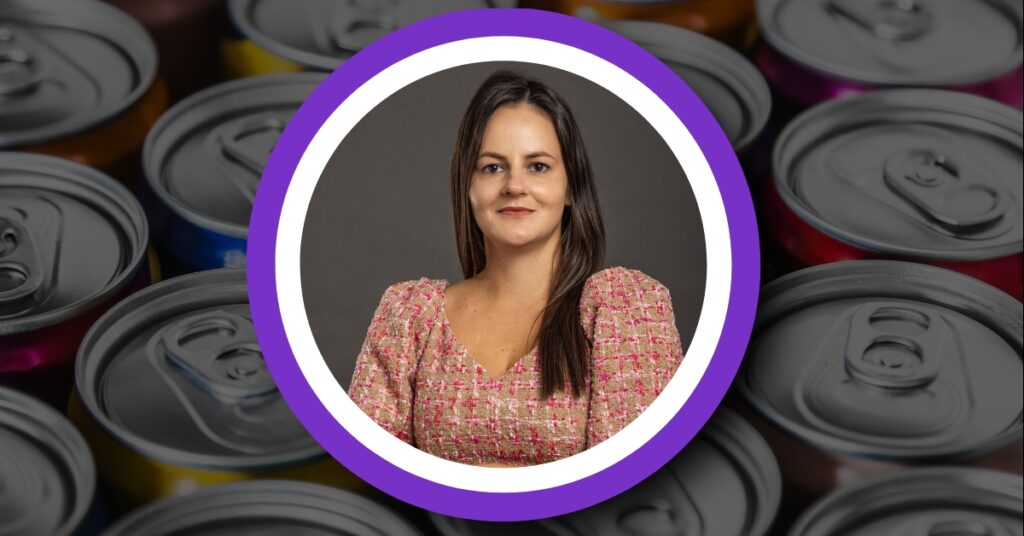
Head of Legal at Hell Energy Magyarorszag Dora Kovacs shares with CEE In-House Matters key milestones in her professional journey, her thoughts on the legal and regulatory trends that are likely to impact the FMCG sector over the next few years, what skills make an in-house professional an effective leader, and more.
CEEIHM: Could you walk us through your professional journey? What were the key milestones and achievements?
Kovacs: Even during university, I deliberately sought roles where law wasn’t theoretical, but directly shaped real decisions. I worked at a law firm, gained experience at the Ministry of Justice, and supported my studies through several scholarships. After graduating, I spent a short period at the Ministry of Interior, which further strengthened my understanding of how regulation and institutions operate in practice.
Since joining HELL ENERGY, I’ve worked on a wide range of high-impact projects, spanning brand initiatives, complex cross-functional matters, and business-critical assignments – all of which marked important milestones.
The major milestone was being trusted to build and lead my own legal team, marking a clear shift from primarily technical execution to strategic leadership and long-term capability-building.
One of the experiences that has shaped me most has been supporting initiatives on a scale that genuinely define a company’s trajectory. Even in my early thirties, I’m aware that contributing – particularly from a legal perspective – to developments of that magnitude is rare, and that I may not have many opportunities in the future to be involved in projects of comparable scale. Some of these experiences are the kind that may only come once in a lifetime, and they have profoundly shaped how I think about risk, ownership, and long-term value creation.
CEEIHM: How do you balance brand growth and creativity with regulatory and compliance constraints?
Kovacs: This is one of the most challenging and most rewarding aspects of the role. I don’t see law as the enemy of creativity; I see it as the set of guardrails that allows creativity to scale safely and sustainably. The goal is not to say “no,” but to help teams reach a “yes” that is defensible and durable.
For fast-moving, innovation-driven brands, we often operate in areas where legal practice hasn’t fully caught up. That’s where a strong in-house legal function adds real value: we translate ambiguity into practical pathways, identify the real risk drivers, and design solutions that protect the brand while enabling momentum.
CEEIHM: How do you make legal advice practical and actionable for non-lawyers across the company? What kinds of legal risks are hardest to explain to non-lawyers, even at senior level?
Kovacs: Clarity is a core principle for both me and my team. We focus on plain language, concrete examples, and decision-oriented guidance on what the options are, what the trade-offs look like, and what we recommend. We also actively check understanding, because the best advice is only useful if it lands and can be implemented.
The hardest risks to communicate are typically those without immediate, visible consequences, especially reputational exposure, precedent-setting decisions, or cumulative risk that builds quietly over time. These can be business-critical precisely because they don’t always feel urgent in the moment, yet they shape what becomes “acceptable” in the organization and can influence outcomes years later.
CEEIHM: For an international brand like HELL ENERGY, what kinds of issues absolutely have to be governed centrally, and which ones are safer to leave to local teams?
Kovacs: Certain areas require centralized governance to protect consistency and reduce fragmentation, most importantly brand protection, core compliance principles, and matters where inconsistency would create legal or reputational vulnerability across markets.
At the same time, many regulatory requirements are inherently local: labeling and language specifics, marketing restrictions, and local authority expectations. In those areas, local expertise is essential, which is why we work closely with local counsel. The most effective model is a clear global framework with strong escalation routes, global oversight where needed, local execution where it’s smarter and safer.
CEEIHM: In your experience, do consumer trends reach regulators or brands first? Could you provide an example?
Kovacs: A good example is the rapid rise of often cited generative AI and how quickly it influenced branding, communication, and product concepts. At HELL ENERGY, we were proud to launch an AI-generated energy drink concept ahead of a fully mature regulatory environment. It’s a clear illustration of the gap: innovation accelerates immediately, while legal frameworks take time to catch up and standardize expectations.
CEEIHM: What legal or regulatory trends do you think will have the biggest impact on the FMCG sector over the next few years?
Kovacs: Two areas stand out. First, AI-related regulation and governance, especially around transparency, IP, accountability, and how brands communicate and operate in AI-enabled environments.
Second, sustainability-driven regulation, particularly packaging requirements and scrutiny around environmental claims. The direction is clear: higher standards for substantiation, more transparency, and less tolerance for vague or unverified “green” messaging. For FMCG, credibility will increasingly be a compliance issue, not just a communications choice
CEEIHM: What skill outside of law has been most valuable in your role as Head of Legal?
Kovacs: Strategic thinking combined with strong business acumen. I firmly believe that a company is best served by an in-house legal team. In-house legal works best when it anticipates how decisions ripple across the business commercially, operationally, and reputationally, and helps shape outcomes early, not just review them late.
I see legal as more than decision support: it’s a partner function that prevents problems before they happen and actively creates value through better structure, clearer processes, and stronger decision-making discipline across the organization.
CEEIHM: What do you think distinguishes a technically strong lawyer from a true legal leader?
Kovacs: Technical excellence is the baseline. Leadership starts with self-awareness: being reflective, understanding your limits, and continuously evolving. A true legal leader prioritizes long-term impact over short-term wins, takes responsibility, and builds systems that make the organization stronger, not just individual transactions “safe.”
Equally important is investing in people. Strong leaders create space for growth, encourage independent thinking, and develop a team that can operate with confidence and ownership. In my view, leadership is less about having every answer and more about enabling others to succeed at a high standard.